
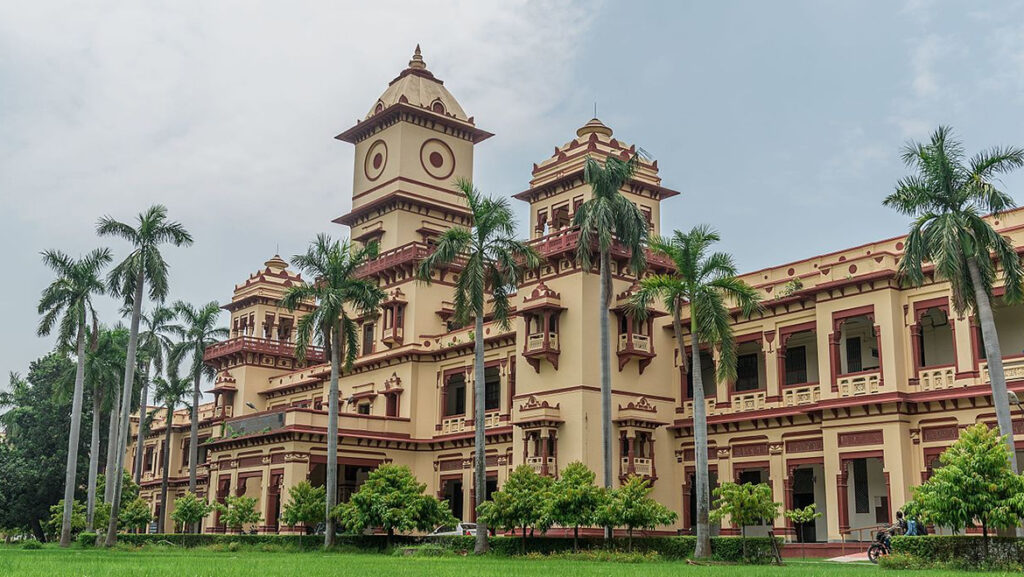
Overview:
Established in 1916 by Pandit Madan Mohan Malaviya, BHU is one of Asia’s largest residential universities. Its founding vision combined Indian knowledge traditions with modern science, shaping a comprehensive institution that now spans arts, sciences, engineering, agriculture, medicine and management. Located in Varanasi, a historic center of learning, BHU serves a diverse student body and plays a key role in regional development.
Academic Excellence:
BHU houses the Institute of Science, IIT (BHU), Faculty of Arts, Faculty of Commerce, Faculty of Social Sciences and the Institute of Medical Sciences, among many others. Programs balance foundational coursework with practical training, clinics and studio‑based learning where applicable. Students encounter a broad general education before specializing, enabling cross‑disciplinary literacy and employability.
Research & Innovation:
Research spans molecular biology, Ayurveda and integrative medicine, agricultural innovations, river systems, metallurgy and cultural heritage. The university collaborates with national laboratories and international partners, and supports technology transfer through incubation and industry liaison cells. Field stations and museum collections make BHU a destination for empirical and archival research.
Campus Life:
BHU’s vast campus incorporates temples, museums, libraries, sports pavilions and residential hostels. Cultural festivals, literary societies and music traditions create a unique atmosphere that blends scholarship with heritage. Student support includes counseling, skill workshops and career services, while the city’s ghats and institutions provide rich experiential learning contexts.
Global Recognition:
BHU features in national rankings across disciplines and sustains links with universities in Japan, Europe and North America. Alumni lead in medicine, public administration, science, arts and entrepreneurship. The university’s comprehensive scope and value proposition attract students from across India and abroad.
Admission Highlights:
Admissions are conducted largely through national tests such as CUET and NEET (for medical programs). Many departments offer merit scholarships, hostel accommodation and fee concessions; selection focuses on academic readiness and potential for interdisciplinary engagement.